| ..:: MENU UTAMA ::.. |
Artificial Intelligence Policy

JDMP takes allegations of research and publication misconduct seriously, including data fabrication or falsification, plagiarism, image manipulation, unethical research, undisclosed conflicts of interest, inappropriate authorship, peer-review manipulation, and duplicate publication.
Readers, reviewers, authors, editors, or other concerned parties may submit a factual report to the editorial office, preferably identifying the article or manuscript, explaining the concern, and supplying available supporting evidence. The editorial office will handle reports in confidence to the extent practicable and lawful.
Every case is considered on its merits in light of relevant publication-ethics guidance, including guidance issued by the Committee on Publication Ethics (COPE). The editorial office documents its decisions and aims to communicate outcomes fairly while protecting confidentiality and due process.
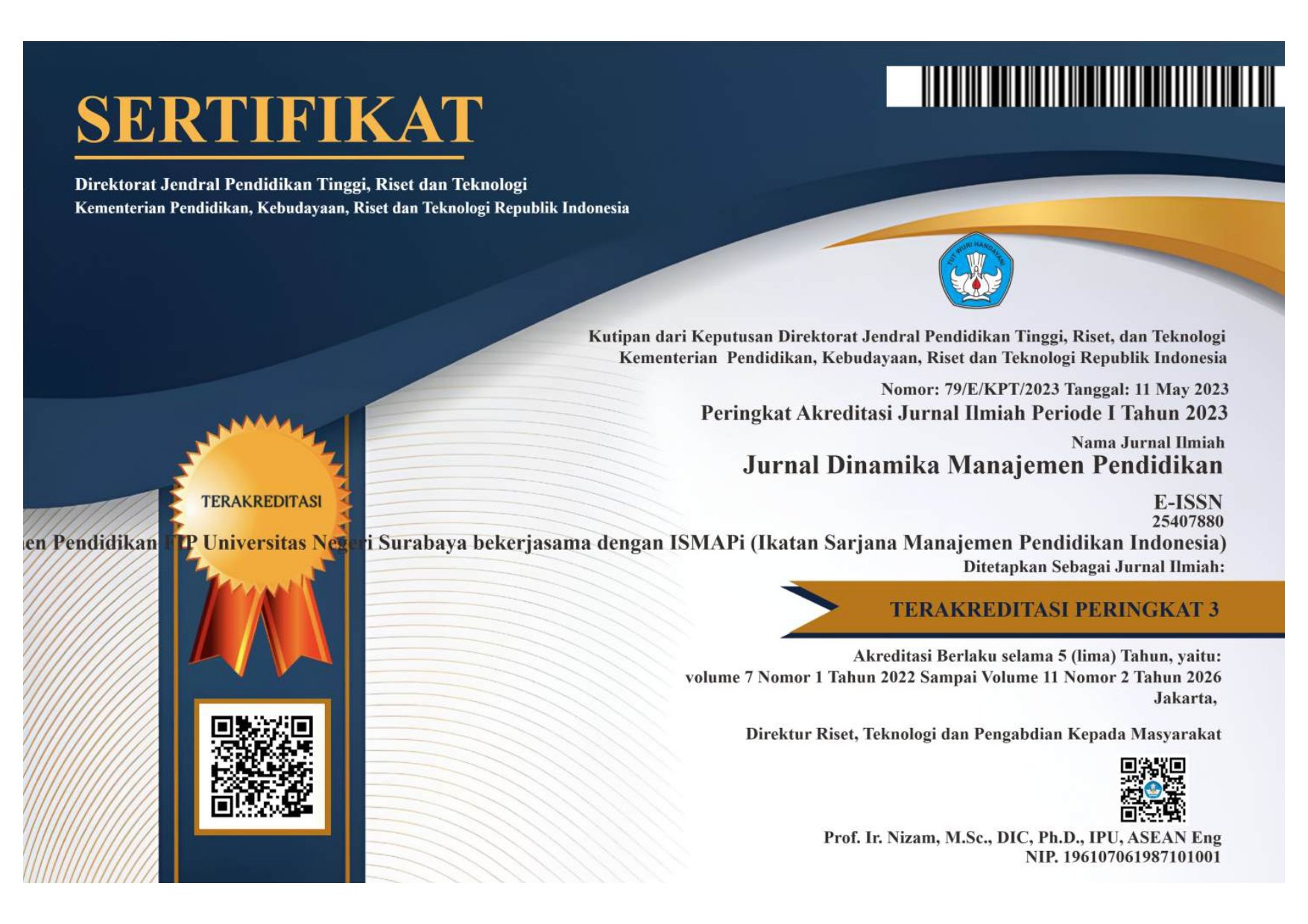
Jurnal Dinamika Manajemen Pendidikan (JDMP) E-ISSN : 2540-7880 Indexing by:









Publisher
Universitas Negeri Surabaya
Website: https://journal.unesa.ac.id/index.php/jdmp
Email: [email protected]
in collaboration with:
ISMAPI (Ikatan Sarjana Manajemen dan Administrasi Pendidikan Indonesia)
Website: http://www.ismapi.or.id/
MoA JDMP-ISMAPI: pdf
and
Asosiasi Prodi Manajemen/Administrasi Pendidikan Indonesia (APMAPI)
MoA JDMP-APMAPI: pdf
Jurnal Dinamika Manajemen Pendidiikan (JDMP) is licensed under a Creative Commons Attribution-ShareAlike 4.0 International License.