Plant Diversity and Community Structure in the Highland Savanna of Bromo Tengger Semeru National Park
DOI:
https://doi.org/10.26740/jrba.v8n2.p120-136Abstract
Disturbances continually decline savanna plant diversity, yet Indonesian research historically favors forests and lowland tropical savannas (e.g., Baluran and East Nusa Tenggara), leaving montane savannas understudied. Given these dynamic shifts, establishing baseline plant diversity data is imperative. This study specifically aims to evaluate plant diversity, community structure, and their relationship with abiotic parameters in Bromo Tengger Semeru National Park’s disturbed montane-subalpine savanna. Vegetation sampling used 30 plots (10 m x 5 m based on minimum curve area), measuring plant density, cover, abiotic factors, and soil microorganisms (three replications). Diversity was evaluated using the Shannon-Wiener index (H’), and dominance using the Importance Value Index (IVI) and cover percentage. Spearman’s correlation was used to examine the relationship between species richness and environmental factors. Vegetation inventory identified fifteen plant species belonging to nine families, with a diversity index (H’) of 1.81. Pteridium aquilinum heavily dominated the community structure (IVI = 69.44%), followed by Imperata cylindrica (55.08%). The low-to-moderate plant diversity observed in the Bromo savanna is likely driven by the peak dry season and the heavy dominance of invasive species. These data contribute to the ecological baseline database of the national park, providing a crucial reference for future monitoring of vegetation dynamics.
References
Abreu, R. C. R., Hoffmann, W. A., Vasconcelos, H. L., Pilon, N. A. L., Rossatto, D. R., & Durigan, G. (2017). The biodiversity cost of carbon sequestration in tropical savanna. Science Advances, 3(8): e1701284. https://doi.org/10.1126/sciadv.1701284.
Amouzgar, L., Ghorbani, J., Shokri, M., Marrs, R. H., & Alday, J. G. (2021). Pteridium aquilinum performance is driven by climate, soil and land-use in Southwest Asia. Folia Geobotanica, 55 (2), 301–314. https://doi.org/10.1007/s12224-020-09383-3.
Azhari, I., Syahbani, J. A., & Jannah, S. R. (2025). The impact of tourism activities on the environmental and cultural sustainability of the Tengger Tribe in Ngadas Village. Jupiter, 3(6), 01–18. https://doi.org/10.61132/jupiter.v3i5.1108.
Backer, C. A., & van den Brink, Bakhuizen, Jr R. C. (1965). Flora of Java vol. II. Noordhoff-Groningen. The Netherlands.
Baliton, O. S., Leila, D. L., Rowena, E. D., Cabahug, R. F., Paelmo, Kenneth, A. L., Ramil, S. R., Roberto, G. V., Arnold, K. A., & Castillo. (2020). Ecological services of agroforestry systems in selected upland farming communities in the Philippines. Biodiversitas, 21 (2), 707-717. https://doi.org/10.13057/biodiv/d210237.
Baptiste, A. J., Macario, P. A., Islebe, G. A., Vargas-Larreta, B., Pool, L., Valdez-Hernández, M., & López-Martínez, J. O. (2019). Secondary succession under invasive species (Pteridium aquilinum) conditions in a seasonal dry tropical forest in southeastern Mexico. PeerJ, 7, e6974. https://doi.org/10.7717/peerj.6974.
Bennett, J. A., & Klironomos, J. (2019). Mechanisms of plant–soil feedback: interactions among biotic and abiotic drivers. New Phytologist, 222(1): 91–96. https://doi.org/10.1111/nph.15603
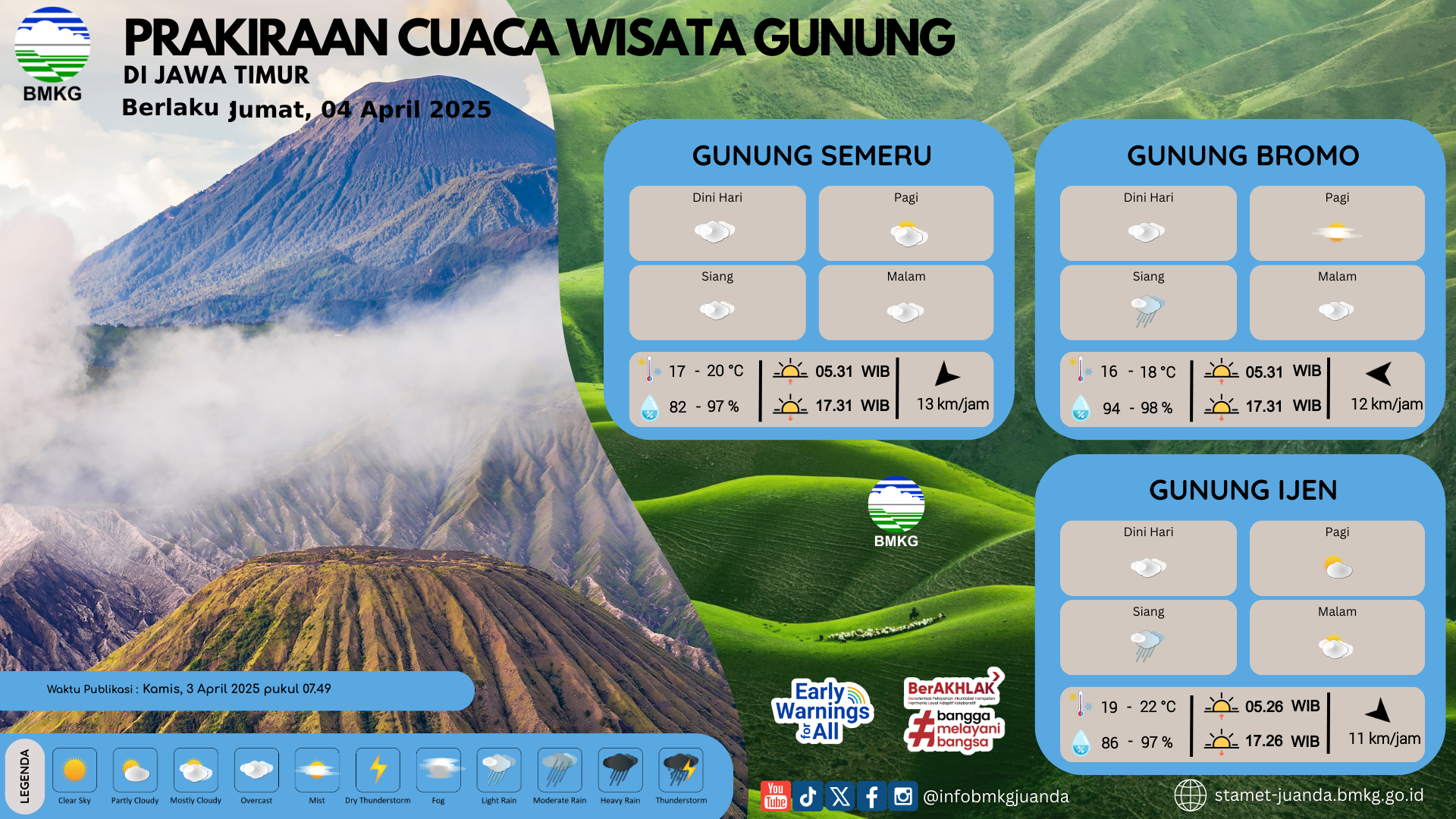
BMKG. 2024a. Weather forecast of East Java Mountain: Mt. Bromo. Retrieved September 1, 2026, from https://stamet-juanda.bmkg.go.id/cuwis/mfy/gunung1.png.
BMKG. 2024b. When is the Dry Season in 2024? Retrieved December 10, 2024, from https://www.bmkg.go.id/press-release/?p=kapan-musim-kemarau-2024-ini-penjelasan-lengkap-bmkg&tag=press-release&lang=ID.
Bouchenak-Khelladi, Y., February, E. C., Verboom, G. A., & Boucher, F. C. (2020). C4 grass functional traits are correlated with biotic and abiotic gradients in an African savanna. Plant Ecology, 221, 241-254. https://doi.org/10.1007/s11258-020-01007-2.
Buisson, E., Le Stradic, S., Silveira, F. A. O., Durigan, G., Overbeck, G. E., Fidelis, A., Fernandes, G. W., Bond, W. J., Hermann, J.-M., Mahy, G., Alvarado, S. T., Zaloumis, N. P. & Veldman, J. W. (2019). Resilience and restoration of tropical and subtropical grasslands, savannas, and grassy woodlands. Biol Rev, 94, 590-609. https://doi.org/10.1111/brv.12470.
Cho, Y. C., Seol, J., & Lim, C. H. (2024). Climate-induced distribution dynamics and niche adaptation of South Korean endemic plants across the Korean Peninsula. Sci Rep, 14, 22253. https://doi.org/10.1038/s41598-024-73569-4
Coelho, N., Gonçalves, S., & Romano, A. (2020). Endemic Plant Species Conservation: Biotechnological Approaches. Plants, 9, 1-22. https://doi.org/10.3390/plants9030345.
Daneshgar, P., & Jose, S. (2009). Imperata cylindrica, an alien invasive grass, maintains control over nitrogen availability in an establishing pine forest. Plant and Soil, 320, 209–218. https://doi.org/10.1007/s11104-008-9886-8.
Distel, R. A., Moretto, A. S., & Didoné, N. G. (2007). Regrowth capacity in relation to defence strategy in Stipa clarazii and Stipa trichotoma, native to semiarid Argentina. Austral Ecol. 32: 651–655. https://doi.org/10.1111/j.1442-9993.2007.01748.x.
Enagbonma, B., Ayomide, F., Ayangbenro, A., & Babalola, O. (2023). Communication between Plants and Rhizosphere Microbiome: Exploring the Root Microbiome for Sustainable Agriculture. https//doi.org/10.20944/preprints202307.0451.v1.
Firmansyah, Y. (2018). Analysis of the Utilization of Sptn 1 Tourism Space in Bromo Tengger Semeru National Park Towards a Sustainable Destination. [Undergraduate thesis, Universitas Brawijaya].
Gebremedhn, H. H., Ousmane, N., Sylvanus, M., Fassinou, C., Taugourdeau, S. Tagesson, T., & Salgado, P. (2023). Grazing effects on vegetation dynamics in the savannah ecosystems of the Sahel. Ecological Processes, 12. https://doi.org/10.1186/s13717-023-00468-3.
Gonin, M., Salas-González, I., Gopaulchan, D., Frene, J., Roden, S., Poel, B., Salt, D., & Castrillo, G. (2023). Plant microbiota controls an alternative root branching regulatory mechanism in plants. Proceedings of the National Academy of Sciences. 120. e2301054120. 10.1073/pnas.2301054120.
Govaerts, R., Lughadha, E. N., Black, N., Turner, R., & Paton, A. 2021. The world checklist of vascular plants, a continuously updated resource for exploring global plant diversity. Scientific Data, 8, 1-10. https://doi.org/10.1038/s41597-021-00997-6.
Griffith, D. M., Michael, A. T., Osborne, C. P., Strömberg, C. A. E., Forrestel, E. J. & Still, C. J. (2015). Biogeographically distinct controls on C3 and C4 grass distributions: Merging community and physiological ecology. Global Ecology and Biogeography, 24, 304–313. https://doi.org/10.1111/geb.12265.
Hassler, S. K., Kreyling, J., Carl, B., nee Eisold, J. B., Cyrus, S., Wagenseil, H., Jentsch, A. (2010). Vegetation pattern divergence between dry and wet season in a semiarid savanna – Spatio-temporal dynamics of plant diversity in northwest Namibia. Journal of Arid Environments, 74(11):1516-1524. https://doi.org/10.1016/j.jaridenv.2010.05.021.
Hilyah, A. M., Fajar, H. M., Ikmaluhakim, D. R., Hawan, S. I., Purwanto, M. S., & Bahri, A. S. (2021). Geological and geophysical studies of the rocks of Mount Bromo and its surroundings. SEWAGATI, Jurnal Direktorat Riset dan Pengabdian Kepada Masyarakat – DRPM ITS, 5(2). https://doi.org/10.12962/j26139960.v5i2.405.
Hooper, D. U., Chapin, F. S. III., Ewel, J. J., Hector, A., Inchausti, P., Lavorel, S., Lawton, J. H., Lodge, D. M., Loreau, M., Naeem, S., Schmid, B., Seta, L. H., Symstad, A. J., Vandermeer, J., & Wardle, D. A. (2005). Effects of biodiversity on ecosystem functioning: A consensus of current knowledge. Ecological monographs, 75, 3–35. https://doi.org/10.1890/04-0922.
Humphries, T., & Florentine, S. K. (2021). A comparative review of six invasive Nassella Species in Australia with implications for their management. Plants, 10(6): 1036. https://doi.org/10.3390/plants10061036.
Hutley, L. B., & Setterfield, S. A. (2018). Ecosystems: Savanna. Reference module in earth systems and environmental. Sciences, 2, 623-633. https://doi.org/10.1016/b978-0-12-409548-9.11148-0.
Hutley, L. B., Setterfield, S. A. (2008). Savanna. Editor(s): Sven Erik Jørgensen, Brian D. Fath, Encyclopedia of Ecology, Academic Press. Pages 3143-3154. ISBN 9780080454054. https://doi.org/10.1016/B978-008045405-4.00358-X.
Jamin, F. S., Eso, R., Latupapua, A. I., Siregar, A., Haumahu, J. P., Risamasu, R. G., Liubana, S., Silahooy, C., Habi, M. L., Kaya, E., Soplanit, R., Kunu, P. J., Opier, J., Talakua, S., Diana, M., & Rani, A. S. (2025). Soil Science Fundamentals for Agriculture. MMFAST Publishing.
Kartawinata, K., & Sudarmonowati, E. (2022). Natural Vegetation Diversity of the Cibodas Biosphere Reserve. BRIN.
Kato-Noguchi, H. (2022). Allelopathy and allelochemicals of Imperata cylindrica as an invasive plant species. Plants, 11, 2551. https://doi.org/10.3390/plants11192551.
KLHK. 2020. Performance Report: Adapting Amidst the Pandemic, Continuing to Keep Up with the Changing Times. Planning Bureau, Ministry of Environment and Forestry.
Krebs, C. J. 2014. Ecology: The Experimental Analysis of Distribution and Abundance, 6th ed. Harlow, Essex: Pearson.
Kurniawan, H., & Yuniati, D. (2015). Carbon storage potential in three types of savanna in East Nusa Tenggara. Journal of Wallacea, 4(1), 51-59. 10.18330/jwallacea.2015.vol4iss1pp51-62
Laurila-Pant, M., Lehikoinenb, A., Uusitaloc, L., & Venesjärvi, R. (2015). How to value biodiversity in environmental management? Ecological Indicators, 55, 1–11. https://doi.org/10.1016/j.ecolind.2015.02.034.
Magurran, A. E. (2004). Measuring Biological Diversity. Blackwell Publishing.
Maia, V. A., De Souza, C. R., & Santos, R. M. D. (2019). Species tolerance degree to soil conditions shaping plant communities. Folia Geobotanica, 54, 199–210. https://doi.org/10.1007/s12224-019-09341-8.
Marchant, R. (2010). Understanding complexity in savannas: climate, biodiversity and people. Current Opinion in Environmental Sustainability, 2, 101–108. https://doi.org/10.1016/j.cosust.2010.03.001.
Mareddy, A. R. (2017). Environmental impact assessment: theory and practice. ButterworthHeinemann, Elsevier. https://doi.org/10.1016/B978-0-12-811139-0.00007-4.
Maulidah, A. A. (2026). Association of the Javan mountain endemic species Styphelia javanica and invasive species in the savanna of Bromo Tengger Semeru National Park. [Undergraduate Thesis, Universitas Negeri Malang]
Maya, S. 2022. Monitoring of endemic savanna plant populations in Bromo. Retrieved May 15, 2026, from https://bromotenggersemeru.org/news/monitoring-populasi-tumbuhan-endemik-savana-di-bromo
Mbangilwa, M. M., Malotie, J. M., Kasoro, R. F., & Jiang, L. C. (2019). Effects of savannah conservation on the floristic diversity and structure of species characteristics of the savannas of manzonzi in democratic Republic of Congo. Applied Ecology and Environmental Research, 18, 3775-3794. http://dx.doi.org/10.15666/aeer/1803_37753794.
Mira, Y. D., Ramirez, L. A., Londono, L. F., & Castaneda, D. A. (2021). Allelopathic effects of common bracken (Pteridium aquilinum (l.) kuhn) on germination and growth of economically important weeds. Chilean Journal of Agricultural and Animal Science, 37, 290-300. http://dx.doi.org/10.29393/chjaas37-30aeyd40030.
Mkungo, L., Odindi, J., Mutanga, O., & Matongera, T. N. (2023). Modelling landscape vulnerability to the Bracken fern (Pteridium aquilinum) invasion in a remnant urban Sandstone Sourveldt grassland ecosystem. Scientific African, 22. https://doi.org/10.1016/j.sciaf.2023.e01947.
Novianti, V., Artha. I. W. S., Akhsani, F., Arrosadi, M., & Berliana, M. (2021). Changes in microbial composition on plowed coal mines overburden. AIP Conference Proceedings, 2353, 030008. https://doi.org/10.1063/5.0052624.
Novianti, V., Marrs, R. H., Choesin, D. N., Iskandar, D. T., & Suprayogo, D. (2018). Natural regeneration on land degraded by coal mining in a tropical climate: Lessons for ecological restoration from Indonesia. Land Degradation and Development, 29(11), 4050–4060. https://doi.org/10.1002/ldr.3162
Novitasari. (2018). Vegetation Dynamics in Burnt Savanna Fields in Bromo Tengger Semeru National Park (TNBTS). [Undergraduate thesis, Institut Pertanian Bogor]. https://repository.ipb.ac.id/handle/123456789/93201?show=full
Nugraha, M. P. (2025). Analysis of the impact of forest fires: Pre-wedding incident of mount bromoand its disaster risk. Calamity: A Journal of Disaster Technology and Engineering, 2(2), 70-86. https://doi.org/10.61511/calamity.v2i2.2025.1508.
Ortiz, A., Marinace, H. M., Fisk, J. J., Hankenson, L., Pacheco, A. S., Goodman, H. D., Potts, E., Laurance, S. G. W., Bischoff, E. A., Holman, V. F., Love, S. M., Tng, D. Y. P., & Apgaua, D. M. G. (2023). Shoot flammability differences between forest and savanna trees are driven by leaf dry matter content. Flora, 307, 152370. https://doi.org/10.1016/j.flora.2023.152370.
Oosting, H. J. (1958). The study of plant communities: An introduction to plant ecology (2nd ed.). W. H. Freeman and Company.
Osborne, C. P., Charles-Dominique, T., Stevens, N., Bond, W. J., Midgley, G., & Lehmann, C. E. R. (2018). Human impacts in African savannas are mediated by plant functional traits. New Phytol, 220, 10-24. https://doi.org/10.1111/nph.15236
Pellegrini, A. F. A. (2016). Nutrient limitation in tropical savannas across multiple scales and mechanisms. Ecology, 97, 313–324. https://doi.org/10.1890/15-0869.1
Pennington, R. T., Lehmann, Caroline, E. R., & Rowland, L. M. (2018). Tropical savannas and dry forests. Current Biology, 28, 541–545. https://doi.org/10.1016/j.cub.2018.03.014
Perdinan, Tjahjono, R. E. P., Infrawan, D. Y. D., Armanto, A. N., Pratiwi, S. D., Putra, E. I., Yonvitner, Oktaviani, S., Lestari, K. G., Adi, R. F., Sudiarno, A. R., Kaban, E., Widyaningrum, R., & Mayorf, J. (2024). Management strategies of tropical savanna ecosystem for multiple benefits of community livelihoods in semiarid region of Indonesia. World Development Sustainability, 4, 100137. https://doi.org/10.1016/j.wds.2024.100137.
POWO. (2025). Plants of the World Online. Facilitated by the Royal Botanic Gardens, Kew. Published on the Internet. Retrieved 23 January, 2025 from https://powo.science.kew.org/
Qurrota, A. S. (2010). Vegetation analysis in the savanna of Bromo Tengger Semeru National Park (BTS NP). [Undergraduate Thesis, Universitas Islam Negeri Maulana Malik Ibrahim].
Ramadhani. (2026). The impact of fire on the diversity of native, pioneer, and invasive plants in the Bromo Caldera, Bromo Tengger Semeru National Park. [Undergraduate Thesis, Universitas Brawijaya].
Ratnakar, A., & Shikha. (2018). Assessment of co-contamination in soil samples from agricultural areas in and around Lucknow City, Uttar Pradesh, India. Current Science, 115, 2267. https://doi.org/10.18520/cs/v115/i12/2267-2274.
Rudolf, G. (1954). Klassifikation der Klimate nach W. Köppen [Classification of climates after W. Köppen]. Landolt-Börnstein – Zahlenwerte und Funktionen aus Physik, Chemie, Astronomie, Geophysik und Technik, alte Serie. Vol. 3. Berlin: Springer. pp. 603–607.
Russell-Smith, J., & Sangha, K. K. (2018). Emerging opportunities for developing a diversified land sector economy in Australia’s northern savannas. The Rangeland Journal, 40, 315. https://doi.org/10.1071/RJ18005.
Sabarno, M. Y. (2002). Savannah of Baluran National Park. Biodiversitas, 3(1), 207-212. https://doi.org/10.13057/biodiv/d030107.
Sankaran, M. (2019). Droughts and the ecological future of tropical savanna vegetation. Journal of Ecology, 107, 1531–1549. https://doi.org/10.1111/1365-2745.13195.
Sarmiento, G. (1984). The Ecology of Neotropical Savannas. Harvard University Press, Cambridge, MA. USA. 235 pages
Shimadzu, H., Dornelas, M., Henderson, P. A., & Magurran, A. E. (2013). Diversity is maintained by seasonal variation in species abundance. BMC Biol., 11(98). https//doi.org/10.1186/1741-7007-11-98.
Solbrig, O. T., Ernesto, M., & Juan, S. (1996). Biodiversity and tropical savanna properties: a global view. In: Functional Roles of Biodiversity: A Global Perspective (ed. H.A. Mooney, J.H. Cushman, E. Medina, et al.), 185–211. Chichester, UK: Wiley.
Srikanthasamy, T., Leloup, J., N'Dri, A. B., Barot, S., Gervaix, J., Koné, A. W., Koffi, K. F., Le Roux, X., Raynaud, X., & Lata, J. C. (2018). Contrasting effects of grasses and trees on microbial N-cycling in an African humid savanna. Soil Biology and Biochemistry, 117, 153-163. https://doi.org/10.1016/j.soilbio.2017.11.016.
Suhardono, S., Fitria, L., & Suryawan, I. W. K., Septiariva, I., Mulyana, R., Sari, M., Nova, U., & Prayogo, W. (2024). Human activities and forest fires in Indonesia: An analysis of the Bromo incident and implications for conservation tourism. Trees, Forests and People, 15: 100509. https//doi.org/10.1016/j.tfp.2024.100509.
Sukweenadhi, J. (2025). Relationship between Soil and Plants. In: Soil Fertility and Organic Matter. Hei Publishing, Padang Sumatera Barat.
Suprihatin, A. J., Ekayani, M., & Tampubolon, B. I. (2016). Potential causes and economic loss value of forest fires at the Ranu Pani Resort, Bromo Tengger Semeru National Park. [Master’s thesis, Institut Pertanian Bogor].
Sutomo, van Etten, E., & Wahab, L. (2021). Savanna plant communities in the wetter parts of the Indonesian archipelago. Folia Geobotanica, 56(4), 193-204. https//doi.org/10.1007/s12224-021-09401-y.
Sutomo, van Etten, E., & Wahab, L. (2016). Proof of Acacia nilotica stand expansion in Bekol Savanna, Baluran National Park, East Java, Indonesia through remote sensing and field observations. Biodiversitas, 17(1), 96-101. https://doi.org/10.13057/biodiv/d170114.
Sutomo. (2016). Origin of savanna formation: Literature review from East Nusa Tenggara and research results from Baluran East Java Indonesia In: National seminar on biodiversity of Nusa Tenggara. eds G. Jurumana, M. R. Kaho, A. S. Raharjo, H. Kurniawan, & M. Hidayatullah. pp. 246-265. Kupang Forestry Research Institute, Kupang East Nusa Tengara Indonesia.
Telford, E. M., Pennington, R. T., Ringelberg, J. J., Stevens, N., Lehmann, C. E. R. (2026). The ecology of encroachment: identifying the species and plant ecological strategies driving African savanna vegetation change. Glob Chang Biol., 32(2): e70707. https://doi.org/10.1111/gcb.70707.
Tierney, J. A., & Wurzburger, N. (2024). Phosphorus controls symbiotic nitrogen fixation in fire-dependent longleaf pine savannas. Journal of Ecology, 112, 2057–2068. https://doi.org/10.1111/1365-2745.14380
Tudorescu, A. M., Negru, C., Mocanu, B. G., & Pop, F. (2024). Quality sustaining vegetation index for natural resources monitoring using satellite images. Engineering Science and Technology an International Journal, 59, 101847. https://doi.org/10.1016/j.jestch.2024.101847.
van der Putten, W. H., Bardgett, R. D., Bever, J. D., Bezemer, T. M., Casper, B. B., Fukami, T., Kardol, P., Klironomos, J. N., Kulmatiski, A., Schweitzer, J. A., Suding, K. N., Van de Voorde, T. F. J., & Wardle, D.A. (2013), Plant–soil feedbacks: the past, the present and future challenges. J Ecol, 101: 265-276. https://doi.org/10.1111/1365-2745.12054.
van Steenis (2006). Flora. PT. Pradya Paramita, Jakarta.
van Steenis, C. G. G. J., & van Steenis-Kruseman, M. J. (1950). Flora Malesiana (Vol. 6, Issue 3, p. 431). Indonesian Botanical Gardens, & Indonesian Institute of Sciences, Noordhoff-Kolff, Indonesia. https://www.biodiversitylibrary.org/page/28853094
Wang, B., Yang, X., Zhu, Y., Tu, Y., Wang, D., & Indree, T. (2024). Plant diversity mediates the response of ecosystem multifunctionality to climate factor in Eastern Eurasian Steppe. Global Ecology and Conservation, 50, e02827. https://doi.org/10.1016/j.gecco.2024.e02827.
Wibowo, J. M., Muljaningsih, S., & Satria, D. (2021). Competitiveness of sustainable ecotourism at the bromo tengger semeru national park. Jurnal Penelitian Sosial dan Ekonomi Kehutanan, 18, 45-62. http://dx.doi.org/10.20886/jpsek.2021.18.1.45-62.
Williams, B. A., Watson, J. E. M., Beyer, H. L., Grantham, H. S., Simmonds, J. S., Alvarez, S. J., Venter, O., Strassburg, B. B. N., & Runting, R. K. (2022). Global drivers of change across tropical savannah ecosystems and insights into their management and conservation. Biology Conservation, 276, 109786. https://doi.org/10.1016/j.biocon.2022.109786.
Williams, B. M., & Houseman, G. R. (2014). Experimental evidence that soil heterogeneity enhances plant diversity during community assembly. Journal of Plant Ecology, 7(5): 461–469. https://doi.org/10.1093/jpe/rtt056.
Williamson, G. J., Tng, D. Y. P., & Bowman, D. M. J. S. (2024). Climate, fire, and anthropogenic disturbance determine the current global distribution of tropical forest. Environ. Res. Lett., 19, 024032. https://doi.org/10.1088/1748-9326/ad20ac
Wilsey, B. J. (2018). The Biology of Grasslands. Oxford University Press.
Zama, N., Kirkman, K., Mkhize, N., Tedder, M., & Magadlela, A. (2022). soil acidification in nutrient-enriched soils reduces the growth, nutrient concentrations, and nitrogen-use efficiencies of Vachellia sieberiana (DC.) Kyal. & Boatwr saplings. Plants (Basel), 11(24), 3564. https://doi.org/10.3390/plants11243564.
Zayadi, H., Hakim, L., Sudarto, & Batoro, J. (2024). Plant diversity on coffee agroforestry land in the buffer zone of Bromo Tengger Semeru National Park in East Java, Indonesia. Biodiversitas, 25(3): 1030-1036. https://doi.org/10.13057/biodiv/d250316.

Downloads
Published
How to Cite
Issue
Section
License
Copyright (c) 2026 Jurnal Riset Biologi dan Aplikasinya

This work is licensed under a Creative Commons Attribution-NonCommercial 4.0 International License.
 Abstract views: 59
,
Abstract views: 59
, PDF Downloads: 77