Analysis of the Pumping Capacity of Pulopancikan Pump House for Flood Control in Gresik Regency
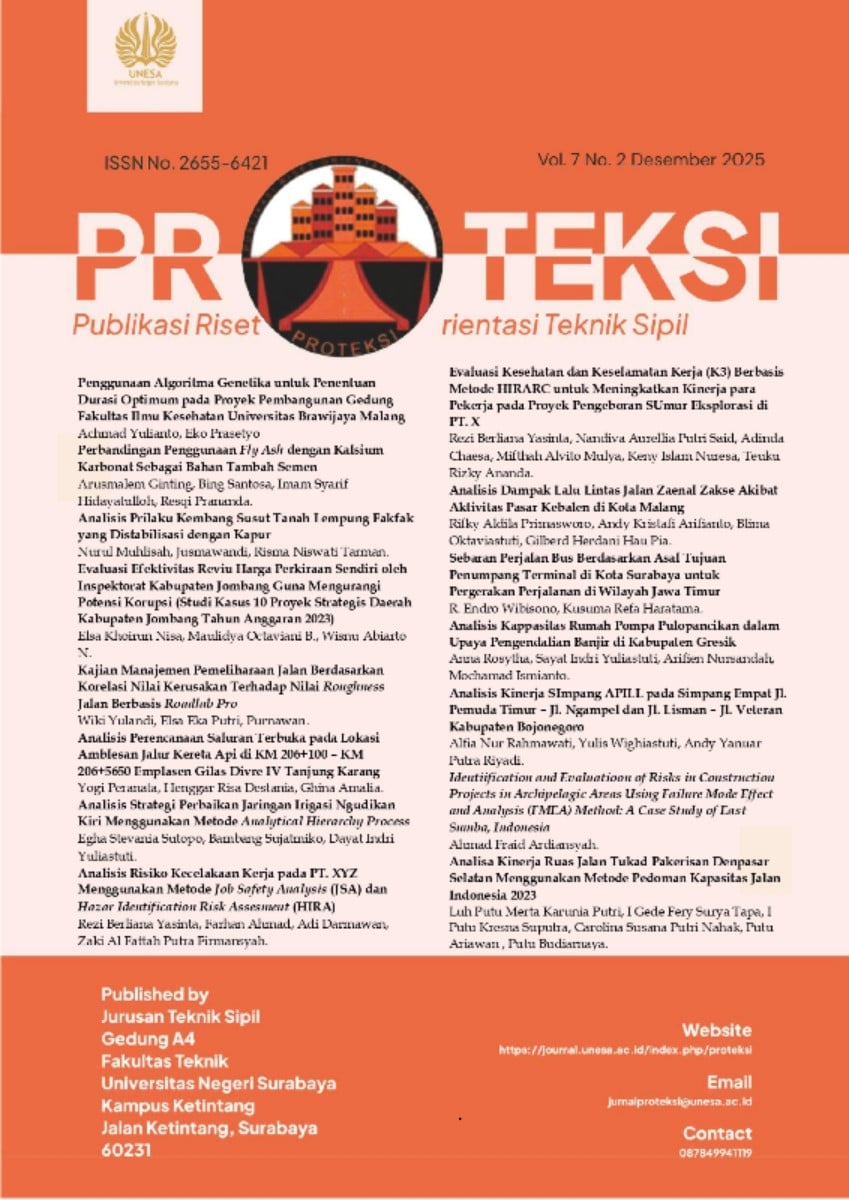
Analisis Kapasitas Rumah Pompa Pulopancikan dalam Upaya Pengendalian Banjir di Kabupaten Gresik
DOI:
https://doi.org/10.26740/proteksi.v7n2.p197-203Keywords:
Drainage system, Flood, Log Pearson Type III, Pump house, RainfallAbstract
The study analyze the pumping capacity of the Pulopancikan Pump House in flood control efforts in Gresik Regency, Indonesia. The area frequently experiences inundation due to high rainfall, sedimentation, and tidal backflow. The research applied hydrological and hydraulic analyses using maximum daily rainfall data from three climatology stations (Tambak Ombo, Bunder, and Cerme) for the period 2014–2023. Rainfall frequency analysis was conducted usings: Gumbel, Normal, Log Normal, and Log Pearson Type II. Based on the Smirnov–Kolmogorov and Chi-Square goodness-of-fit tests, the Log Pearson Type III distribution was selected as the most appropriate model. The design flood discharge was determined using the Rational Method, yielding 23.654 m3 for a 10-year return period. The planned pumping capacity is 4.25 m3/s, consisting of three main pumps and one sludge pump, which is considered sufficient to manage the runoff volume within a two-hour operating time. Evaluation results indicate the Pulopancikan pump system effectively reduces inundation when operated in stages. However, the existing drainage channel capacity needs improvement to accommodate combined flows from rainfall and pump discharge.
References
BMKG. (2023). *Laporan Analisis Iklim Ekstrem Jawa Timur.* Jakarta: Badan Meteorologi, Klimatologi, dan Geofisika.
Chow, V. T., Maidment, D. R., & Mays, L. W. (1988). Applied Hydrology. New York: McGraw-Hill.
Maidment, D. R. (1993). Handbook of Hydrology. New York: McGraw-Hill.
Prawira, D., Lestari, R., & Rinaldi, M. (2020). Analisis kapasitas drainase perkotaan akibat perubahan tata guna lahan di Surabaya. Jurnal Teknik Sipil dan Lingkungan, 5(2), 102–111.
Rahayu, S., & Hidayat, A. (2019). Pengelolaan sistem pompa terintegrasi untuk pengendalian genangan di kawasan urban. Jurnal Hidrologi Indonesia, 14(1), 45–54.
Shahin, M. (1976). Hydrology and Water Resources of Small Catchments. Rotterdam: Balkema.
Soemarto, C. D. (1999). Hidrologi Teknik. Jakarta: Erlangga.
Soewarno. (1995). Hidrologi: Pengukuran dan Analisis Data Aliran Sungai. Bandung: Nova.
Triatmodjo, B. (2008). Hidrologi Terapan. Yogyakarta: Beta Offset
Downloads
Published
Issue
Section
License
Copyright (c) 2025 Anna Rosytha, Dayat Indri Yuliastuti, Arifien Nursandah, Mochamad Ismianto

This work is licensed under a Creative Commons Attribution-NonCommercial 4.0 International License.
 Abstract views: 192
,
Abstract views: 192
, PDF Downloads: 331