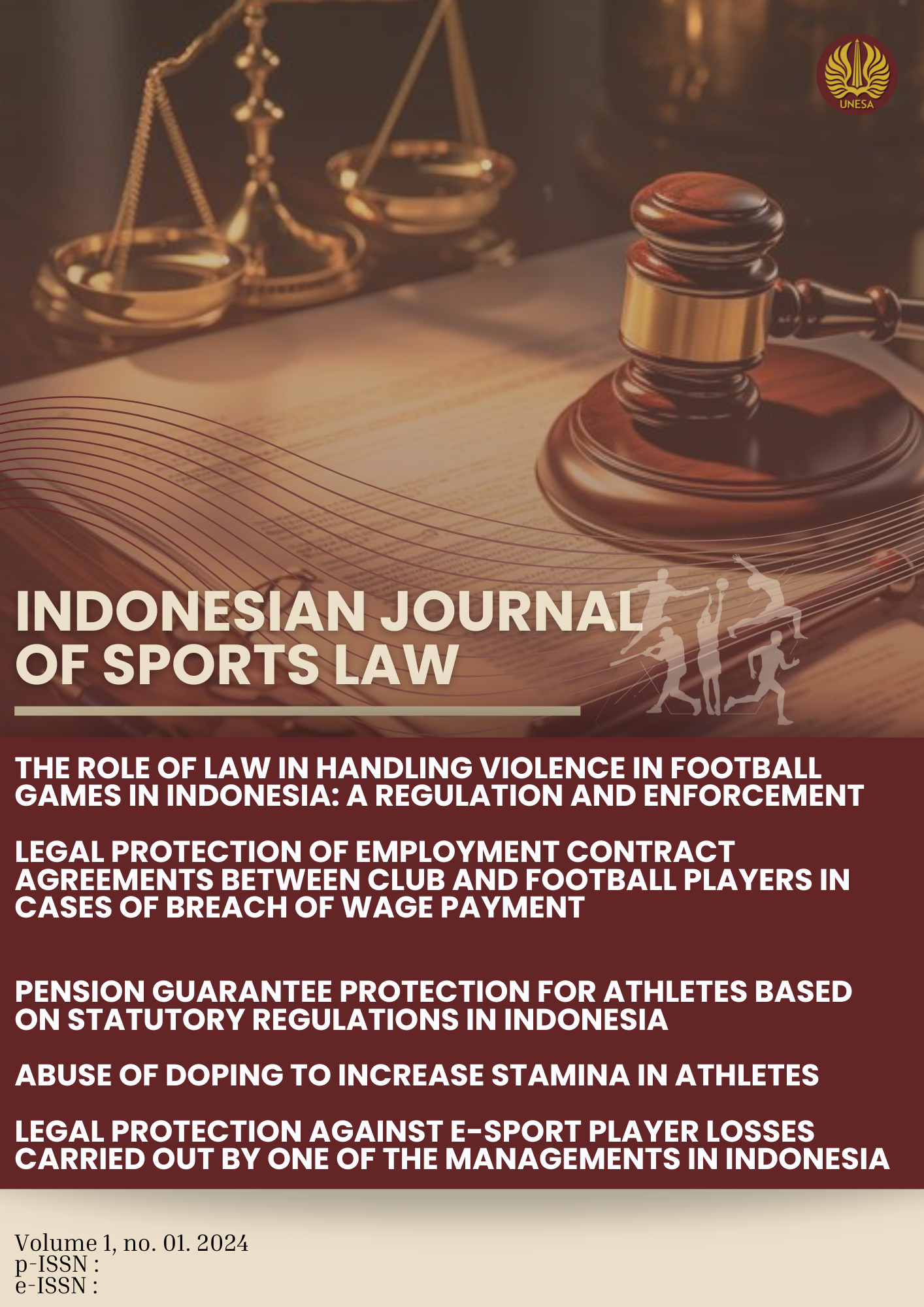
Abuse Of Doping To Increase Stamina In Athletes
DOI:
https://doi.org/10.26740/ijsl.v1i01.35745Keywords:
Doping abuse;, Athletes;, Sports Integrity; , Prevention; , Anti-DopingAbstract
Doping abuse remains a significant challenge in the world of sports, particularly due to its use by athletes to enhance physical performance, endurance, and stamina. Despite its perceived benefits in improving athletic performance, the misuse of prohibited substances may pose serious risks to athletes' health and undermine the principles of fair competition and sports integrity. This study aims to examine the prevention of doping abuse among athletes, identify commonly used doping substances, and analyse their potential effects on athletes' health and sporting performance. This research employs a descriptive qualitative method by examining relevant literature, scientific publications, and other supporting sources concerning doping practices in sports. The collected information is analysed descriptively to provide a comprehensive understanding of the causes, types, consequences, and preventive measures associated with doping abuse. The findings are expected to improve awareness and understanding among athletes, coaches, and sports stakeholders regarding the health risks and ethical implications of doping. Furthermore, effective prevention requires education, regular doping tests, strict enforcement of anti-doping regulations, and cooperation among sports organisations, medical professionals, and relevant authorities. These measures are essential to protect athletes' health, uphold fair competition, and promote integrity in sports.
References
American Orthopaedic Society for Sports Medicine. “Anabolic Steroids.” Accessed November 4, 2026. https://www.sportsmed.org/anabolic-steroids.
Bhasin, Shalender, et al. “Adverse Health Consequences of Performance-Enhancing Drugs: An Endocrine Society Scientific Statement.” Endocrine Reviews 35, no. 3 (2014): 341–375. https://doi.org/10.1210/er.2013-1058.
Bhasin, Shalender, et al. “Anabolic-Androgenic Steroid Use in Sports, Health, and Society: A Joint Position Statement of the American College of Sports Medicine.” Medicine & Science in Sports & Exercise 53, no. 8 (2021): 1778–1794. https://doi.org/10.1249/MSS.0000000000002670.
Conti, Andrea A. “Doping in Sports: A Historical and Conceptual Overview.” Medicina nei Secoli: Arte e Scienza 22, nos. 1–3 (2010): 181–190.
Merriam, Sharan B., and Elizabeth J. Tisdell. Qualitative Research: A Guide to Design and Implementation. 4th ed. San Francisco: Jossey-Bass, 2016.
Miles, Matthew B., A. Michael Huberman, and Johnny Saldaña. Qualitative Data Analysis: A Methods Sourcebook. 3rd ed. Thousand Oaks, CA: SAGE Publications, 2014.
Ntoumanis, Nikos, et al. “Psychosocial Predictors of Doping Intentions and Use in Sport and Exercise: A Systematic Review and Meta-Analysis.” British Journal of Sports Medicine 58, no. 19 (2024): 1145–1156. https://doi.org/10.1136/bjsports-2023-107910.
Additional Files
Published
How to Cite
Issue
Section
 Abstract views: 273
,
 PDF Downloads: 0